



Life beneath the cape. Whale and dolphin watching
A marine sanctuary teeming with life.
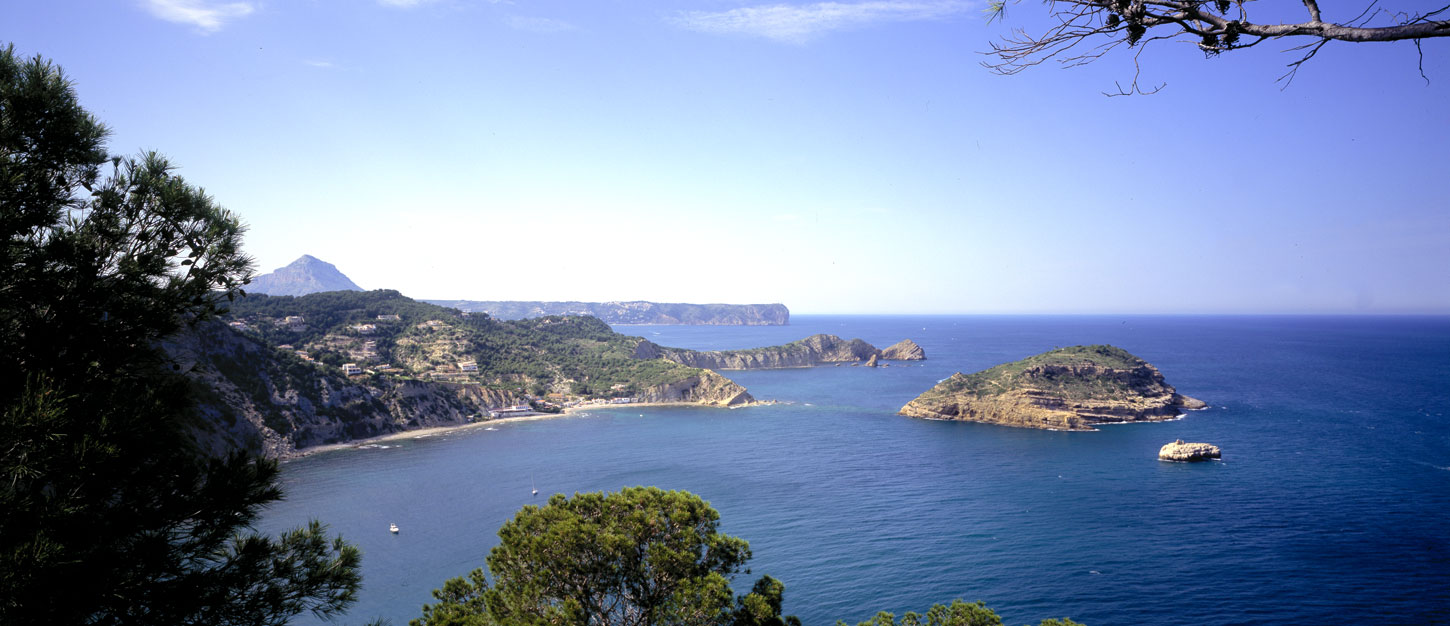
The seabed around Cap de Sant Antoni holds a treasure of immeasurable ecological and environmental value. Declared a Marine Reserve of Fishing Interest in 1993, this protected area spans more than 1,100 hectares and shelters an extraordinary diversity of life. Beneath its crystal-clear waters lie fragile meadows of Posidonia oceanica seagrass — the true ‘lungs of the Mediterranean’, oxygenating the water and protecting the shoreline — along with rocky reefs and an intricate network of submerged caves and crevices of breathtaking beauty.



The channel separating Xàbia from the Pityuses is a migration corridor of international importance for marine life. Its deep waters and plentiful food, especially in spring and summer, turn our coastline into a strategic passage and a prime feeding and transit area for marine mammals.
Which species might you see?
Fin whale (Balaenoptera physalus / Rorcual comú): The great giant of the Mediterranean and the second-largest animal on Earth, it can grow up to 24 metres long. Between May and July, its northbound migration skirts the Xàbia coast, with activity peaking from June to early July. Throughout these months the whales travel along the shoreline towards their summer feeding grounds in the north, which makes this stretch of coast a key spot for sightings.
Bottlenose dolphin (Tursiops truncatus / Dofí mular) and striped dolphin (Stenella coeruleoalba / Dofí llistat): Regular residents and frequent visitors alike, they often reward onlookers with sightings close to shore, leaping acrobatically or riding the wake of passing boats.
Other marine species: Loggerhead turtles (Caretta caretta / Tortugues babaues), threatened seabirds such as the Balearic shearwater (Puffinus mauretanicus / Baldriga balear), and protected fish such as groupers, brown meagre and moray eels.
📄 Technical guide to the Reserve’s species
Would you like the full species list, with IUCN threat status, seasonality and curiosities?
⬇️ Download the Species Guide as a PDF (Marine Reserve and Cliffs)
Monitoring and Research Project
Studying these waters is vital to protecting them, which is why cetaceans are monitored in the area every year. The Oceanogràfic Foundation, the body responsible for the health surveillance of marine wildlife along this coast, leads the Valencian Community Stranding Network through its conservation team.
The environmental management of this strip of coastal land and sea is also tied to the protected area of the Montgó Natural Park, safeguarding habitats all the way from the mountain summit to the depths of the sea.
Visitor tips and good practice
From land: The Cap de Sant Antoni viewpoints make a superb lookout. We recommend bringing binoculars, especially first thing in the morning when the sea is calm.
From the sea: If you are joining a boat trip or hiring a boat, you must follow the Code of Conduct for Cetacean Watching:
Keep a minimum safety distance of 60 metres.
Feeding them, swimming with them or cutting across their path is strictly prohibited.
Keep to a constant speed below 4 knots and avoid any sudden turns.
Never cut across their path or approach them head-on or from behind.
If you plan to dive or snorkel in the Marine Reserve, check the regulations on permits and on mooring to authorised buoys, so that you do not damage the Posidonia meadows. To help you anchor responsibly, we offer a dedicated tool: download the POSIDONIA app.