




Cap de Sant Antoni Lighthouse Building
History, light and contemplation high above the Mediterranean
Perched more than 160 metres above sea level, the Cap de Sant Antoni Lighthouse ranks among the most iconic symbols of our coast. It first shone out in the second half of the 19th century, and ever since, its unmistakable silhouette has presided over the cliff. Its light still guides vessels navigating the Gulf of Valencia.



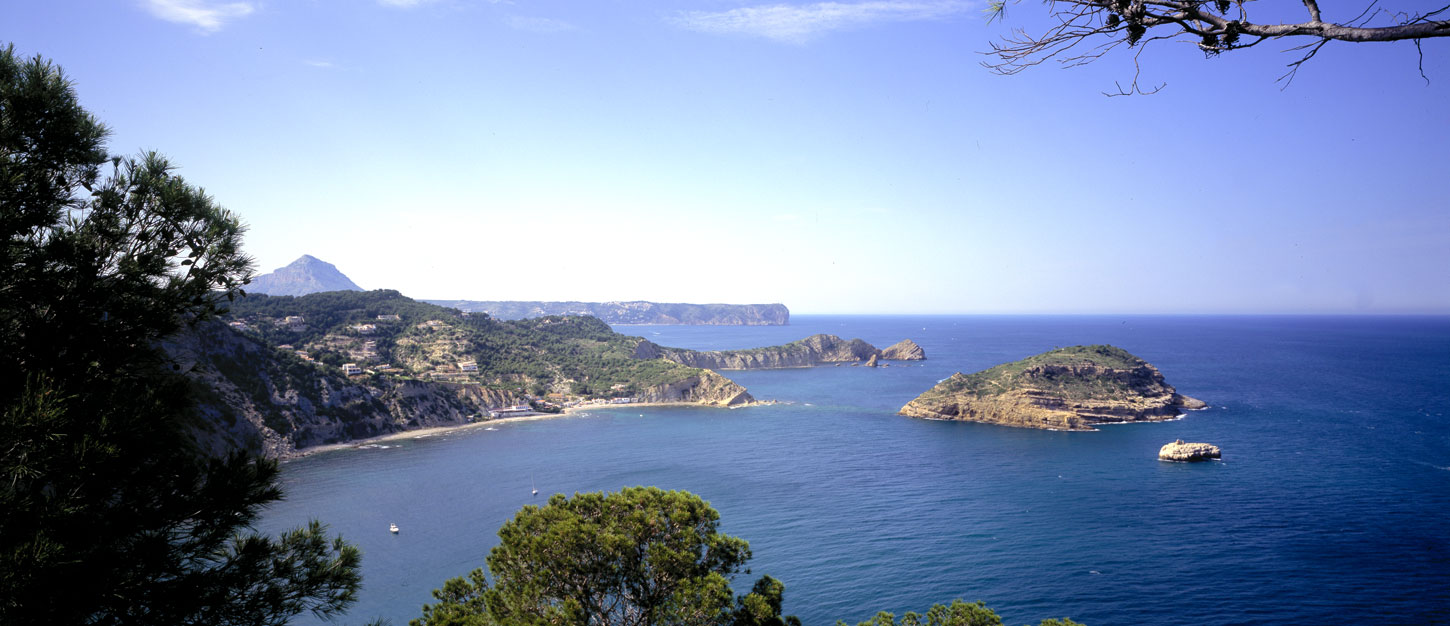
Outside, the setting is a viewpoint you simply cannot miss, rich in both heritage and scenery. The complex retains the character of the old maritime signalling buildings and of the medieval watchtowers that once kept guard over this coast. From close by, you can admire the architecture of this historic installation, trace its story through the Interpretation Area’s signage and take in unforgettable panoramic views of Xàbia Bay and the open sea.
A key point in the defence of the coast
Pirates and watchtowers: Long before the present lighthouse was built, the Torre de Sant Antoni stood on this very spot. This 16th-century lookout tower was used to sight Barbary pirates and raise the alarm.
The first lighting: In 1855 the old beacon fires gave way to a modern optic, and the lighthouse lantern was lit for the first time. Its life as a guide to mariners had begun.
Modernisation: Olive oil fuelled the first lamp. Electricity and new technologies followed, yet the lighthouse has never stopped performing its vital task, right up to the present day.
Lighthouse fact file and curiosities
School for Lighthouse Keepers: In the 19th century, the Cap de Sant Antoni Lighthouse housed one of the few practical schools in Spain where future lighthouse keepers learnt their trade.
A spectacular range and an ally in the Pityuses: Its powerful white light reaches as far as 26 nautical miles (almost 48 kilometres), a constant signal guiding vessels through the Balearic Channel. Nor does it work alone on this crossing. It forms a strategic pair with La Mola Lighthouse on Formentera: the two sentinels mark either end of the narrowest sea passage between the Spanish mainland and Ibiza/Formentera, and mariners have taken cross-bearings from them since the 19th century.
A miscalculation and a new tower (1855–1861): Here, 19th-century engineering met one of its most unusual challenges. When the first lantern was lit in 1855, engineers discovered that it left a shadow zone right over the stretch of water most critical to navigation. The solution came in 1861, when the definitive tower rose at the very tip of the cape, where it still stands today.
A building full of charm: Cylindrical and 17 metres tall, the tower exemplifies the maritime signalling architecture of its day. Its traditional masonry has defied the passage of time. Look up and you will notice the lantern: a twelve-sided prism crowned by a dark green dome.
Management and operation: Still in service, the lighthouse acts as an aid to navigation for commercial and leisure craft. The Port Authority of Alicante manages it.
Did you know…? On clear days, the view from around the lighthouse reveals the mountainous outline of Ibiza in sharp relief. When visibility is exceptional, you can even make out the low-lying profile of Formentera. It is no coincidence: this cape is the point on the Spanish mainland closest to the Balearic Islands.
🔗 Would you like to learn more?
- 👉The hidden history of the Cap de Sant Antoni Lighthouse (on Xabia.com)
- 👉Life on Cap de Sant Antoni: childhood memories beside the signal station that kept watch over Xàbia’s historic 1957 flood (on Xabia.com)